Mini & Tabletop Foosball Tables – A Buyer's Guide
Sizes, prices and what to look for in a mini or tabletop foosball table, who they suit, and when a full-size table is the better buy.
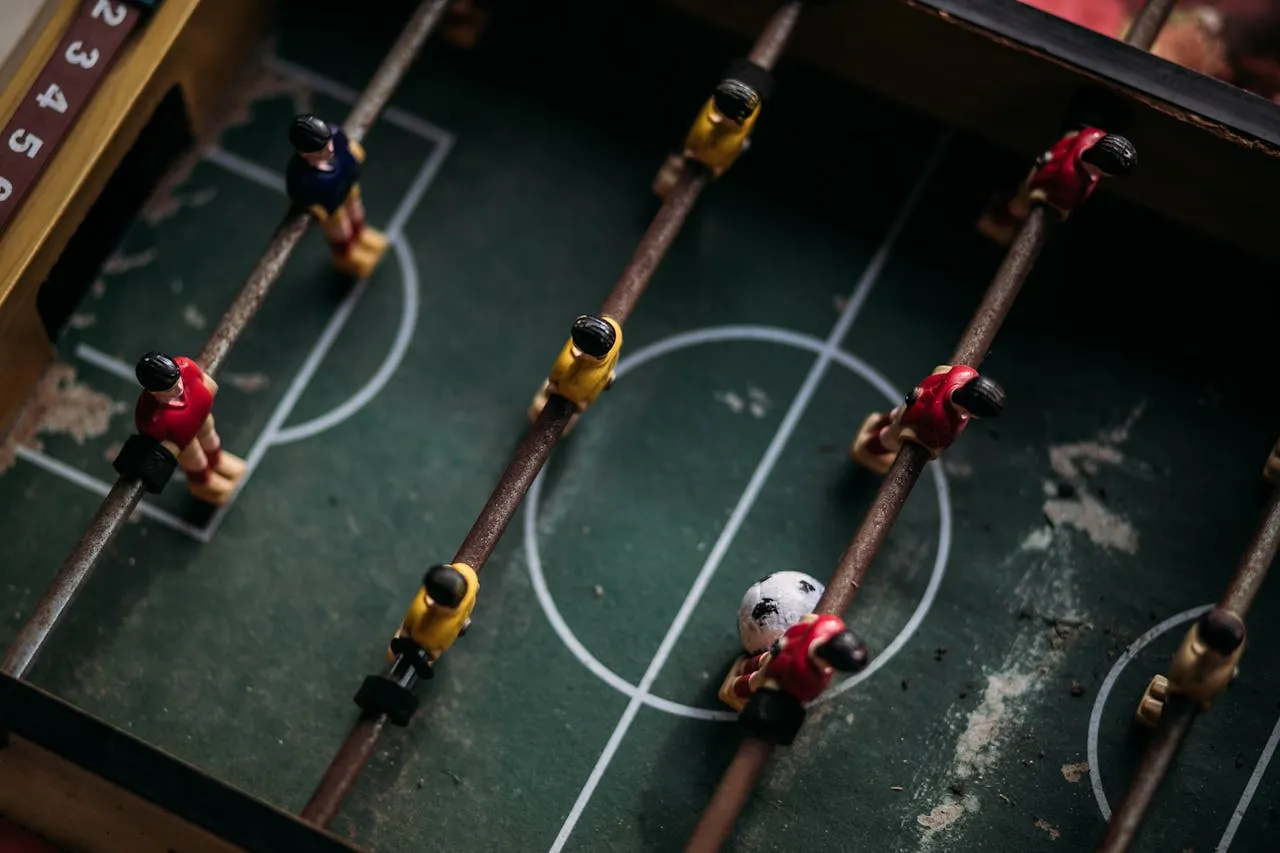
Not everyone has room for a full-size foosball table. A mini or tabletop foosball table gives you the same game in a fraction of the space and for a fraction of the price. Here’s how they compare, what to look for, and who they suit.
Mini foosball table sizes at a glance
| Type | Typical length | Typical height | Typical price | Best for |
|---|---|---|---|---|
| Tabletop | 50–70 cm | Sits on a table | Under $150 | Kids, small apartments, travel |
| Mini freestanding | 85–100 cm | 60–70 cm | $100–$250 | Kids’ bedrooms, playrooms |
| Standard 4ft | About 121 cm | About 80 cm | $200–$500 | Families, casual play |
| Full size / tournament | 140–150 cm | About 90 cm | $1,500+ | Teens, adults, serious play |
Prices vary a lot by retailer and change often, so treat these as rough guides.
Tabletop vs mini freestanding tables
Tabletop foosball tables
A tabletop foosball set is a small cabinet with no legs, designed to sit on a dining table, coffee table or the floor. Most have six to eight players per side on short rods, a small playfield and a bead or sliding score counter.
Pros: cheap, light, packs away into a cupboard, and you can set it at the right height for any child by choosing what you put it on.
Cons: very small goals and players, and they slide around unless you hold them or use a non-slip mat.
Mini freestanding foosball tables
A mini freestanding table has its own short legs, so it stands on the floor at a height that suits children. It’s bigger than a tabletop set, usually with a full 1-2-5-3 player layout, but much smaller and lighter than a standard table.
Pros: feels like a “real” foosball table for kids, doesn’t need other furniture, and still fits in a bedroom or playroom.
Cons: too low for most adults to play comfortably, and still light enough to move during energetic games.
What to look for in a mini foosball table
Small tables are built to a budget, so quality varies a lot. These are the things that separate a good one from a frustrating one:
- Steel rods, not plastic. Chrome-plated steel rods are stronger and slide more smoothly. Plastic rods bend and snap.
- Telescopic rods or rod end caps. Rods that don’t stick out the far side, or at least have rubber end caps, protect children’s faces and eyes.
- Players fixed firmly to the rods. Loose players make it hard to pass or shoot and are the most common complaint about cheap tables.
- Non-slip feet. Rubber feet or a non-slip mat stop the table sliding around.
- A cabinet that’s glued and screwed, not just stapled. Solid MDF corners last much longer.
- A decent ball. Many small tables come with a hard, bouncy plastic ball. Swapping it for a textured ball is the cheapest upgrade you can make. See our guide to foosball table balls for sizes and options.
Who a mini foosball table suits
- Young children. Kids under about ten can reach every rod and see the whole playfield. See our guide to choosing a foosball table for kids by age.
- Apartments and small homes. A tabletop set lives in a cupboard between games.
- Gifts. They’re an affordable present that works for a wide age range.
- Holidays and travel. Tabletop sets are easy to take to a holiday house or caravan.
When a full-size table is the better buy
Mini tables are great for kids, but they’re not built for adult hands or hard shots. If teens or adults will play regularly, or you’d like to learn real skills like passing and the pull shot, a 4ft or 5ft table is worth the extra space and money. Measure your room first: you’ll need about a metre on each long side for players to stand and for the rods to slide.
Our types of foosball tables guide compares every size in more detail. If you’re weighing up a cheap department-store table, see our guide to Kmart, Big W and Rebel foosball tables.
Tips for getting more out of a small table
- Put it on a non-slip mat or rubber shelf liner so it stays still.
- Check and tighten the screws on the players and rods every few months.
- Wipe the playfield so dust doesn’t slow the ball.
- Keep spare balls handy. Small balls go missing under the couch surprisingly fast.
- Add a drop of silicone spray to the rods if they start to stick. Our accessories guide covers what to use.
The verdict
A mini or tabletop foosball table is a cheap, compact way to get kids hooked on foosball, and a fun extra for small spaces. Choose one with steel rods, firmly fixed players and non-slip feet, and it will give years of games. When the kids outgrow it, or the adults want in, it’s time to move up to a full-size table.
Ready to compare full-size tables? Browse our foosball tables guide.